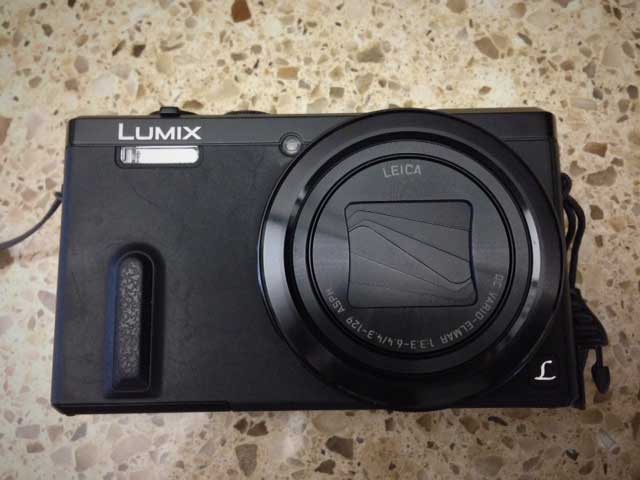
 Above you see my Lumix DMC-ZS40 Digital Camera by Panasonic. I bought this camera last year when I started my Plum Bird Corner blog. Photos are a large part of a blog, and I knew I’d need a camera that I could use for close up photography and distance shots as well. I was taking a photography class at the time and my instructor recommended the Lumix as a camera that would fit my needs. One of the advantages of this camera over my last one, is that the Lumix has both a view finder and a monitor display. You can see both on the photo below. I usually use the monitor, because it shows me exactly what I will see in the recorded photograph. If I’m taking photographs on a very bright day, it’s not always easy to see what is displayed on the monitor, so in this instance I use the view finder which can be adjusted to suit my vision.
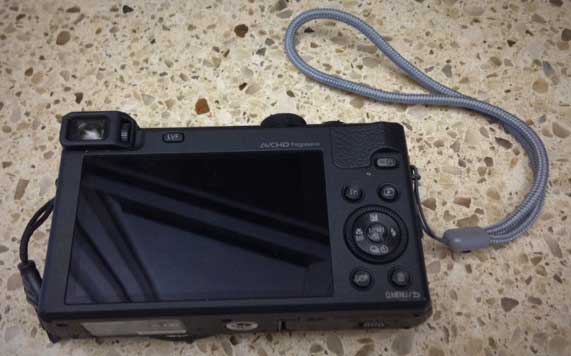 I’ve been very happy with my purchase, but today while looking at the manual, I realized that the Lumix does so much more than simple basics. I decided right then and there, to start from the beginning of the manual and really get to know my digital camera.
Today I started by learning to use the Intelligent Auto Mode or the iA Mode. In this mode the camera optimizes settings to match the subject and recording environment. It’s recommended for beginners, or if you’re in a situation where you want to be ready to take a photo quickly, without making adjustments to focus and exposure. Below you see two photos that I took in iA mode. By the way, all digital cameras have a fully automatic mode.
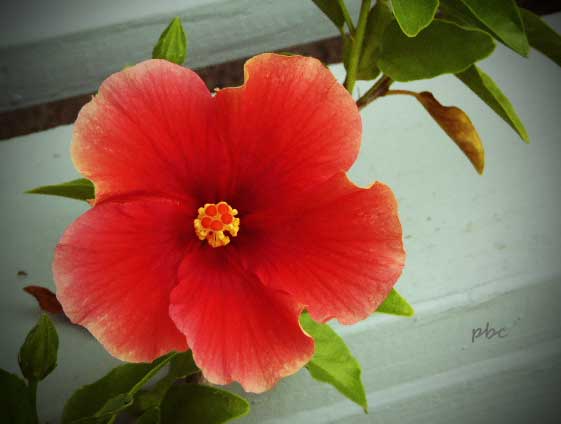 I’m very happy with this photo of our hibiscus. All I did was point and shoot. The camera did the rest. Next I photographed two pieces of ceramic green ware that I’m currently working on. Once more the camera did the work. I simply had to frame the image and press the shutter button..
 I’m really looking forward to working my way through the manual and learning all there is to know about my Lumix DMCZS40. I’m hoping you’ll follow along with me as I learn and share. Perhaps you might learn something new and helpful about digital photography as well. I’d love to hear if you do.