A Trip to the Local Garden Nursery

african-violet-plant

It’s Thursday which means it’s Artist Date Day. In my last post I showed the African Violet Pot I’m making in my slip casting class, and even though it will be a couple of weeks before I finish the project, I thought it would be fun to select a new plant. A visit to the local nursery would also be the perfect place for this week’s Artist date,  because it’s certainly colorful and has a creative atmosphere. Both are requisites for an Artist Date.

Purple-orchid-blossom
I love the green house at the nursery where they keep the African violets and orchids. Here are only three of the many gorgeous plants I saw while browsing.
Creamy-orchid-blossom
It’s a good thing that I traveled by motorcycle and not car today, or else I would have come home with more than just the one African Violet.
White-orchid-blossom
After this lovely white orchid I’ll leave you with a splash of color.
red-poppy-blossom
It really was the perfect place to go for this week’s Artist Date.

Can my Mandevilla Plant Be Saved?

front-flower-2The mandevilla has become a popular patio plant in recent years. Its brilliant flowers add color and a tropical look to any patio. When we purchased our plant, it came with a trellis because it’s a hardy climber and needs to be supported. In most areas the mandevilla is considered an annual, but in Southern California it’s a frost sensitive perennial. They like sandy, well drained soil and do well in the ground and in pots. They grow best in bright indirect light or filtered sun light. Our plant is on the front patio, and gets morning sun. As you can see, it was very happy in this spot during the winter and spring season. In mid August we took a ten day vacation, and unfortunately during that time, Orange County suffered a heat wave, and our irrigation system did not deliver enough water to the plant.

Below you can see what it looked like when we returned home. I’m both sad and embarrassed to post this photo.

Sick-PlantBeing an optimist I immediately deep watered the mandevilla and pruned the dead wood and leaves. I hope to nurse this plant back to good health. I took the photo below this afternoon, and as you can see, the plant is looking a little better. The remaining leaves are turning green and there is some new growth. I will keep you up to date with its progress. I hope that by next week at this time you will see an even bigger improvement.

healing-plant

Bring Your Garden Inside

red-roses-1This morning when I was outside watering my plants and enjoying the beautiful flowers, I asked myself why I don’t cut more flowers and bring them inside where we can enjoy them all day long. I’m always careful to deadhead my plants to encourage more blooms, but why not cut the flowers while they are still beautiful. This way we would have a garden both indoors and out. I took my own advice and above are some of the roses I brought inside today. These are now sitting in our living room on the glass coffee table looking beautiful. Below is a rose from a different bush. This one adorns our kitchen table. Both bouquets are a little past their peak, but the color is lovely and each gives off a wonderful fragrance. Both varieties add something special to the room where they are displayed.

rose-2This may be one of my better ideas. Tomorrow I’ll be outside in the garden looking for more flowers to bring inside. I’ve a feeling that I may be in need of more vases, even if they are empty mason, or spaghetti sauce jars, which make unique containers for displaying cut flowers.

Garden Calendar

MarigoldsJuly is nearly half over, so I decided I should be taking a look at my copy of The Twelve Month Gardener’s Journal. I have the West Coast version. Under July I read that I should deadhead annuals and perennials to encourage flowering. With that in mind, I went about the yard with my pruning shears in hand. Above you can see some of the marigolds that brighten up the yard. I love marigolds. They’re so bright and cheery. Our hummingbird garden is doing well, and I recently added another plant to my collection.  Below you see two photos of Mystic Spires Blue salvia. I was told that once you start collecting salvia it becomes addicting and it’s true, mainly because they’re available in so many beautiful colors.Mystic-Blue-SalviaMystic-Blue-Salvia-2
bougainvillea
Our Bougainvillea is doing very well this year. This plant was purchased in May of 1977, when I returned to California. This was the first plant I bought, because to me Bougainvillea means California. The plant remained in its original pot until we moved into our new home in November of 77. We first planted it in the front of the house, but it did not do very well there. Later we moved it to the backyard, where it has thrived until this very day. It is the first thing we see each morning when we look out into the garden. I don’t know the life span of a bougainvillea but I do hope we can enjoy its beauty for many more years to come.

How to Grow African Violets

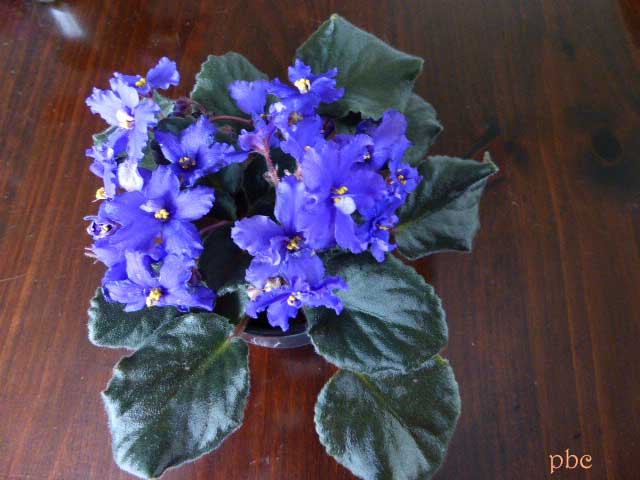
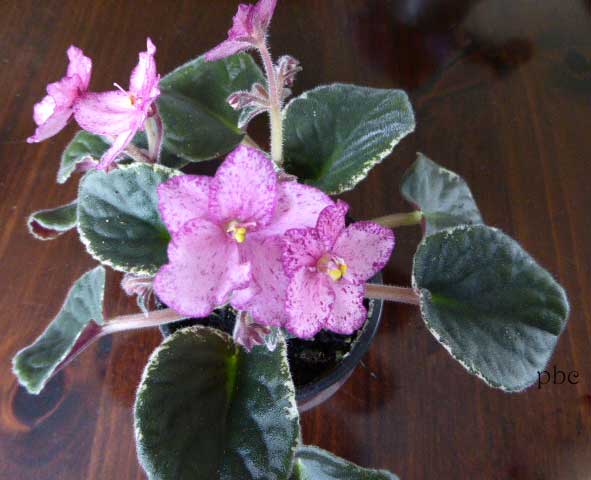
pink-violetThis is a new African violet that I bought the other day. I’d never seen this particular variety before and couldn’t resist the speckled pink blossoms.final-blue-violetI also brought this one home. I’ve loved African violets since I was a little girl in Canada. Mom always had African violets on the kitchen window sill.

When I was first married, one of my husband’s co-workers gave me several African violet plants. She too loved African violets and had collected dozens of varieties. She shared some of her ideas with me and taught me how to grow healthy flowering plants.  I want to share what she taught me many years ago.

First of all, I believe that most people over-water their African violets. Below you see the small 4″ plastic container I place under each plant pot. I find that my African violets do best in the small plastic pots I buy them in. Once a year I repot them in a commercially prepared African violet soil, and I fertilize my plants every few months with a very small amount of all-purpose fertilizer.
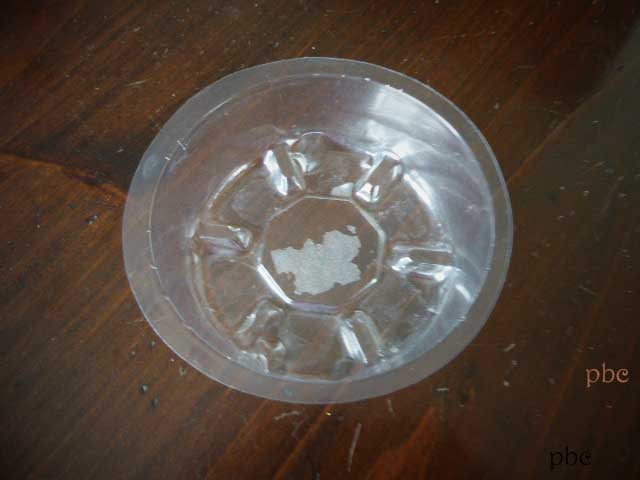
plastic-dishWith the plant pot sitting in the plastic saucer, I usually fill the saucer to the top with tepid water, and let the plant absorb water from the bottom. I do water from the top occasionally being careful to keep leaves dry. Top watering washes harmful salts from the soil that can build up from bottom watering. I don’t water again until the top soil is dry to the touch. Better to underwater slightly than to over water. African-violet-not-trimmedAbove you see a healthy African violet that has finished flowering. The friend who taught me about African violets told me that the leaves in the center of the plant keep the light from reaching in and encouraging flowers. African violets need all of the indirect light they can get to produce flowers.You need to keep your African violets away from direct summer sun because it might burn the foliage and turn leaves yellow. You can see the central leaves above, but In the picture below you can see where I’ve removed some of those leaves.
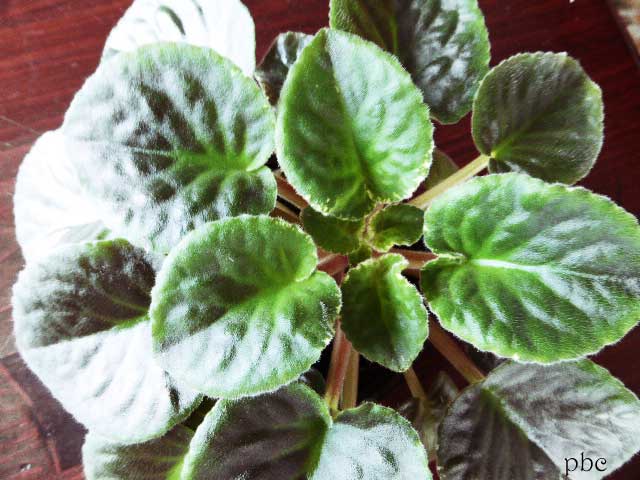
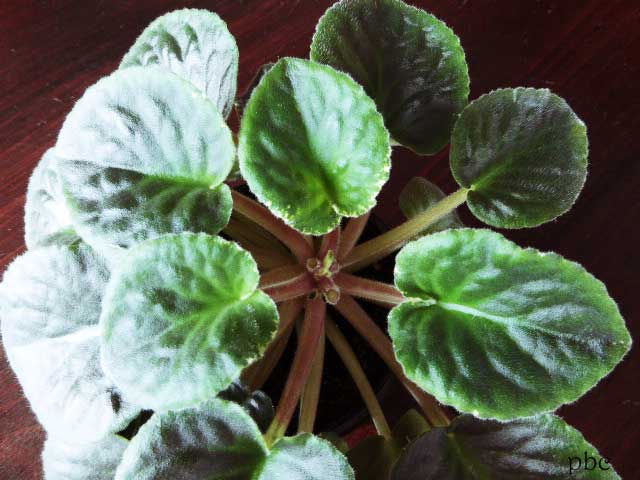
African-violet-pickedThe plant looks a little bare, but before long it will produce buds, and the center will be covered in delicate flowers. When it does I’ll be sure to post a picture.